
Diabetes Mellitus: Understanding Type 1 and Type 2
- Jan 26
- 1 min read
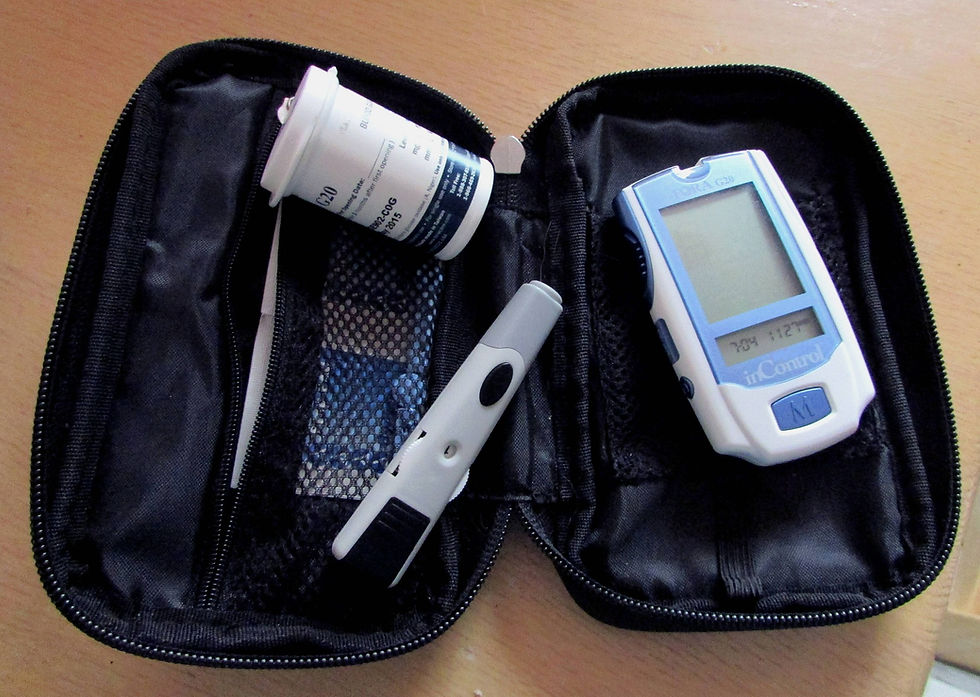
Diabetes Mellitus is a chronic condition that affects how the body regulates blood sugar. It occurs when the body does not produce enough insulin or cannot use it effectively, leading to high glucose levels in the blood that can impact overall health if left untreated.
Type 1 Diabetes
Type 1 diabetes is an autoimmune condition in which the pancreas stops producing insulin. It is often diagnosed at a young age and requires lifelong insulin therapy.
Common symptoms: excessive thirst, frequent urination, unexplained weight loss, fatigue, and blurred vision.
Type 2 Diabetes
Type 2 diabetes is the most common form. In this case, the body produces insulin but does not use it properly. It is commonly associated with lifestyle factors such as overweight, physical inactivity, and family history.
Common symptoms: constant tiredness, frequent infections, slow-healing wounds, and tingling in the hands or feet. Many people may not experience symptoms in the early stages.
Why early detection matters
Early diagnosis and proper management help prevent serious complications such as heart disease, kidney damage, vision problems, and nerve damage.
Managing blood sugar levels is essential for long-term health. Regular checkups and healthy habits make a difference.


Comments